
Ask three development companies what a custom web application costs and you may get three very different answers. That is rarely because one of them is dishonest. It is because each one has imagined a different product.
This guide does not give a price list. A figure without a scope behind it would mislead you. It explains what moves the price up or down, so you can describe what you need, compare estimates fairly and decide where to spend.
Why there is no single price
A website with ten pages is a known quantity. A web application is not. "A booking system" could mean a calendar with a form, or it could mean payments, staff rotas, reminders, refunds and reports for several branches.
The cost follows the amount of thinking, building and testing involved. Two requests that sound the same can differ several times over in real work. The useful question is not "what does it cost?" but "what will this version of it involve?"
What drives the cost
Seven things account for most of the difference between a small estimate and a large one.
The tasks people need to complete. Each thing a user can do, such as register, book, approve, pay or export, has to be designed, built and tested. The number of tasks matters more than the number of screens.
User roles and permissions. An application used by one kind of person is simpler than one where customers, staff and managers each see and do different things. Every extra role multiplies the cases to build and check.
Connections to other systems. Payments, accounting, email, maps or an existing database each add work. The effort depends on how well the other system is documented and how it behaves when something fails.
Existing data. Moving records from spreadsheets or an old system takes cleaning, mapping and checking. It is often underestimated because the mess only shows once someone looks closely.
Design. Using a clear, standard layout costs less than a fully bespoke interface with custom illustration and motion. Both can be right; they are different amounts of work.
Quality requirements. How many devices and browsers must be supported, how much traffic is expected, and how sensitive the data is all affect testing and security work.
Release and support. Setting up hosting, monitoring, backups and a way to handle problems after launch is real work, and it belongs in the estimate.
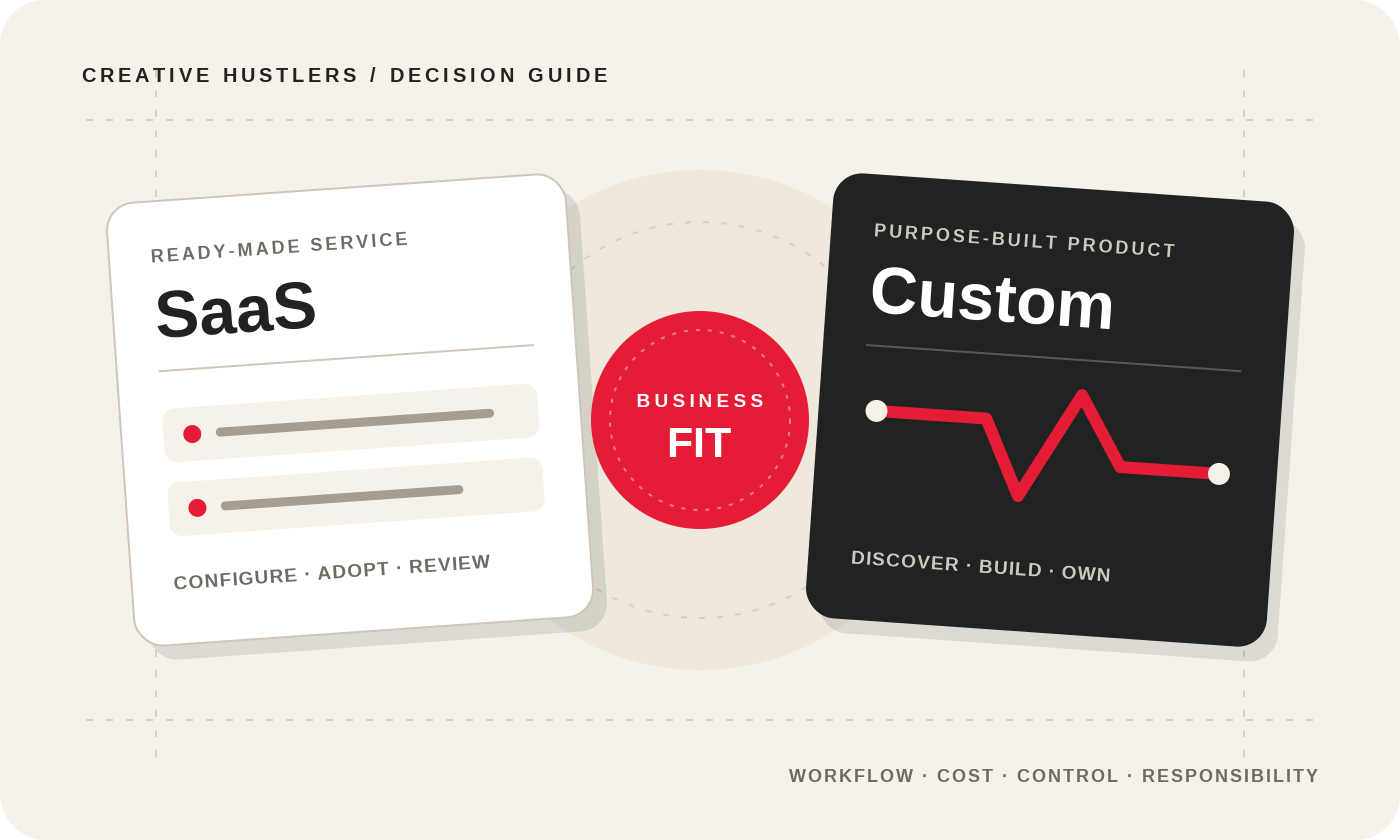
If you are still deciding whether you need custom software at all, our guides on custom software versus SaaS and when to move on from spreadsheets cover that earlier decision.
The same idea at two sizes
Consider a hypothetical training company that wants customers to book courses online.
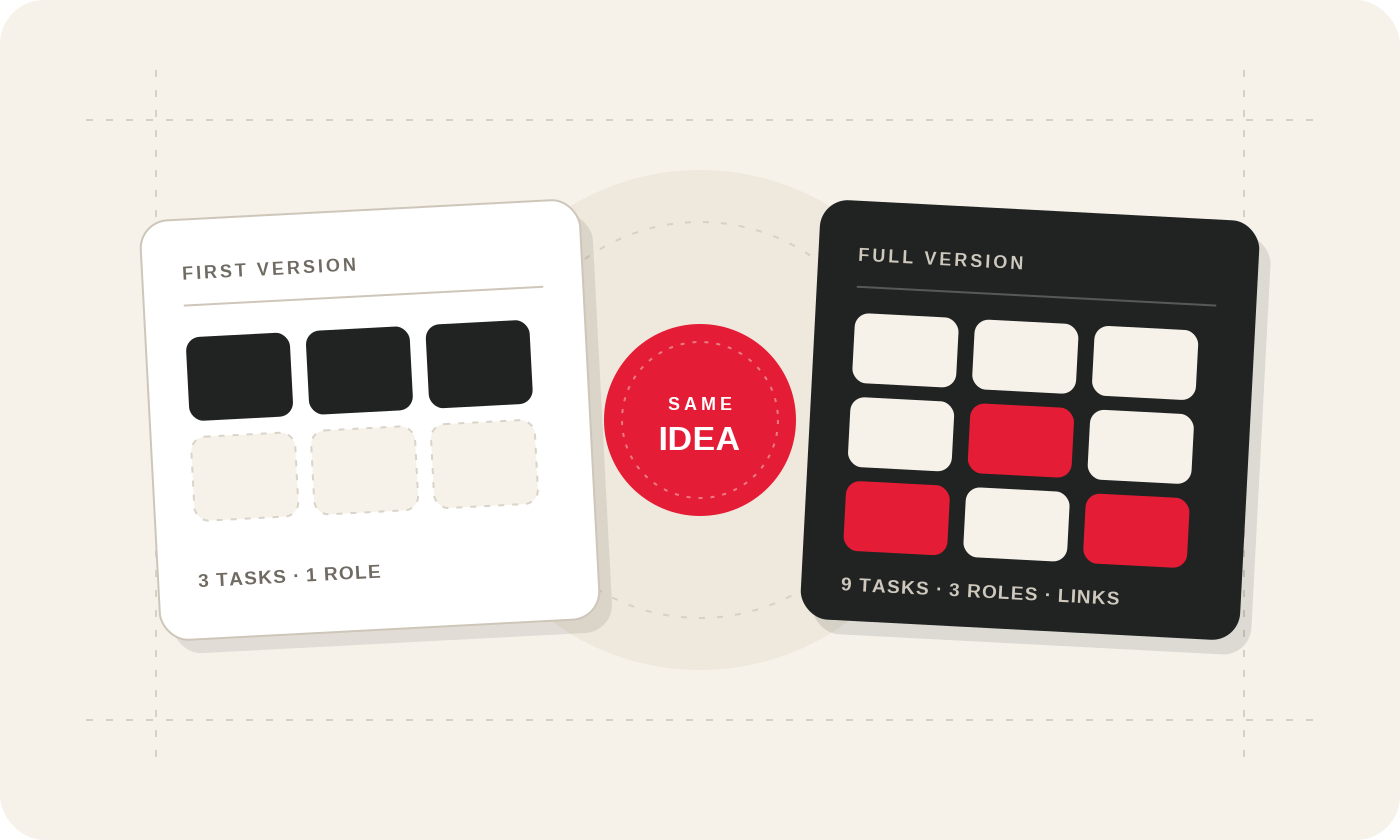
A smaller first version lets a customer see available dates, book a place and receive a confirmation. One administrator adds courses and sees the bookings. Payment is taken by invoice, as it is today.
A larger version adds online payment and refunds, a waiting list, automatic reminders, separate logins for trainers, discount codes, a link to the accounting system and reports by branch.
Both are "a course booking system". The second has several times as many tasks, three kinds of user and two connections to outside systems. Neither is wrong. They are different projects with different prices, and an estimate is only meaningful once you know which one is being quoted.
How pricing is usually arranged
Most development work is priced in one of three ways.
A fixed price for a defined scope. The deliverables, milestones and estimate are agreed before development begins. This suits work that can be described clearly in advance. Changes are handled as separate, agreed additions.
Time-based work on agreed capacity. You pay for the team's time, usually against a monthly allowance. This suits ongoing development where priorities change, and it needs regular review to stay under control.
A phased approach. A short discovery phase defines the scope, then the build is priced from what was learned. This suits ideas that are still taking shape.
None of these is cheaper by nature. A fixed price moves risk to the supplier, who allows for it. Time-based work moves risk to you. Choose the arrangement that matches how certain the scope is.
Costs that sit outside the build
The development estimate is not the whole cost of owning an application. Ask for these to be listed separately:
Hosting and infrastructure, which continue monthly for as long as the application runs.
Third-party services, such as payment processing, email delivery or mapping, often charged by usage.
Licences for any paid software the application depends on.
Maintenance, meaning security updates, fixes and small improvements after launch.
A low build price with unclear running costs can be more expensive over three years than a higher build price with modest ones.
How to lower the cost without lowering the quality
There are sound ways to reduce an estimate. Cutting testing is not one of them.
Release less at first. Decide the smallest version that would be useful to real users, launch it, and add the rest once you have seen how it is used.
Use existing services where they fit. Payment, email and sign-in are solved problems. Building your own version of them rarely makes sense.
Keep to standard design patterns. Familiar layouts are quicker to build and easier for people to use.
Prepare your content and data. Missing text, unclear rules and messy records cause more delay than code does.
Give one person the authority to decide. Projects slow down, and cost more, when every choice waits for a committee.
What to prepare before you ask for an estimate
You do not need a specification. A few plain answers are enough to start:
Who will use the application, and how many kinds of user are there?
What are the five or six most important things each of them must be able to do?
Which existing systems does it need to exchange information with?
What data exists today, and in what form?
Is there a date that matters, and why?
What would make the first version a success?
With these, a development company can tell you what is known, what is assumed and what needs investigating before a dependable figure is possible. See how we approach custom software development for the kind of conversation to expect.
How to read the estimates you receive
Compare what each estimate says, not only the total.
It should state what is included and what is not.
It should list its assumptions, such as who provides designs and content.
It should say what testing is covered.
It should separate the build from running costs.
It should explain how changes are priced.
Be cautious about an estimate that arrives quickly with no questions asked, or one far below the others with no explanation. The difficult parts have probably not been considered yet, and they will return later as delays or extra charges.
FAQ• Frequently Asked Questions
Why do quotes for the same web application vary so much?
Because each supplier has assumed a different scope. One may have priced a simple first version and another a complete product with payments, several user roles and integrations. Ask each to state what is included before comparing totals.
Is a fixed price safer than paying for time?
It is safer when the scope is clear and unlikely to change. When requirements are still forming, a fixed price either includes a large allowance for uncertainty or leads to frequent change requests. A short discovery phase first usually gives a better fixed price.
What ongoing costs should I expect after launch?
Hosting, any third-party services charged by usage, software licences and maintenance for security updates and fixes. Ask for an estimate of each alongside the build price.
Can I start small and add features later?
Yes, and it is often the most economical route. A first version that covers the essential tasks lets you learn from real use before committing to features that may turn out to be unnecessary.
Do I need a detailed specification to get an estimate?
No. A clear description of who will use the application, what they need to do and which systems it must connect to is enough for an indicative estimate. A dependable figure comes after the open questions are answered.